
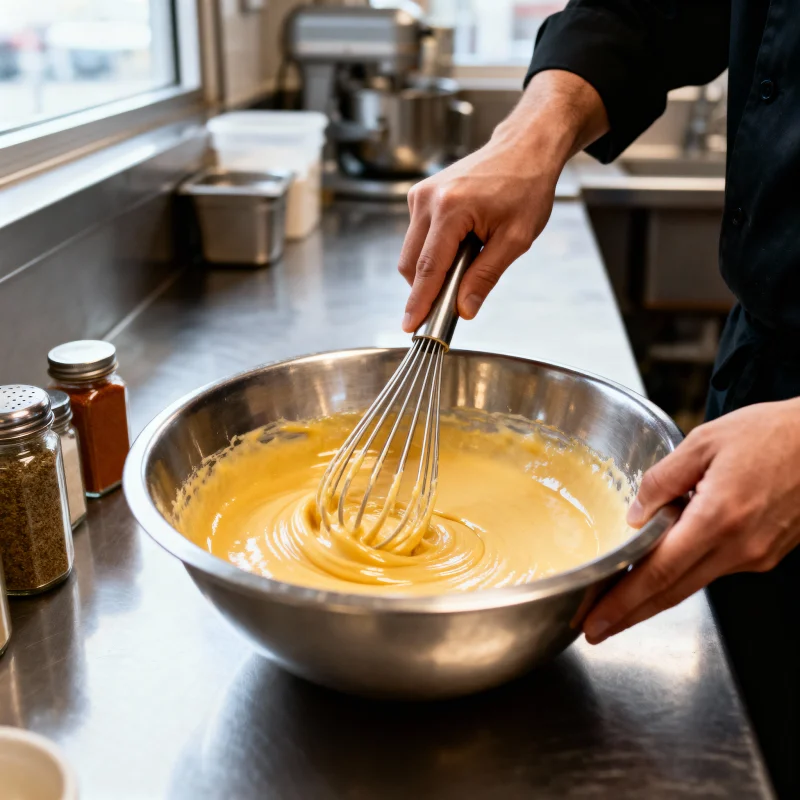
Restaurant fried chicken batter chemistry combines precise flour-cornstarch ratios, controlled temperatures, and chemical leaveners to create microscopic layering and thermal shock that produces the signature crispy, golden crust impossible to achieve with simple home methods.
Restaurant fried chicken achieves its impossible-to-replicate crunch through precise batter chemistry that home cooks rarely command. Professional kitchens use strategic ingredient blends, temperature control, and multi-stage seasoning that delivers complex flavor profiles and textures simple home methods cannot achieve. Understanding these fundamental principles makes restaurant-quality results surprisingly attainable for anyone willing to master the science behind perfect fried chicken.
Key Takeaways
- Professional kitchens use a 50/50 flour-cornstarch blend that creates superior coating thickness and caramelization impossible with single ingredients.
- Maintaining batter below 40°F while keeping oil at 325-375°F creates thermal shock that instantly coagulates proteins for maximum crispiness.
- Chemical leaveners like baking powder introduce CO2 bubbles that expand in hot oil, forming air pockets for a light, porous crust.
- Layered seasoning at three stages—marinade, coating, and post-cook—increases flavor intensity by 40-60 percent over single-stage methods.
- Choosing high smoke point oils and maintaining consistent temperatures prevents the greasiness common in home-fried chicken.
The Science Behind Flour and Cornstarch Ratios
The secret to restaurant-style fried chicken lies in understanding starch composition ratios, specifically the 50/50 blend of cornstarch and all-purpose flour that dominates professional kitchens. This precise combination physically interferes with gluten development, creating a delicate matrix structure that prevents toughness.
Cornstarch particles fill microscopic gaps between flour granules, simultaneously improving coating thickness control while generating golden-brown colors through superior caramelization at lower temperatures. This protects the chicken from burning while supplying that irresistible restaurant-quality crunch.
Baking powder works synergistically with this starch blend to create tiny air pockets throughout the coating, delivering an additional dimension of lightness that elevates texture beyond what starches alone can achieve.
Why Temperature Control Separates Amateur From Professional Results
Oil Temperature Consistency Matters
Professional kitchens maintain precise control between 325°F and 375°F using thermostatic fryers, while home setups experience dramatic temperature drops of 25-50°F when chicken enters the pan. This leads to excessive oil absorption, resulting in greasy, soggy results.
Maintaining proper temperature requires frying in small batches, allowing the oil to fully recover between rounds, and using a reliable thermometer. Choosing oils with a high smoke point, such as peanut or corn oil at 450°F, helps prevent scorching during frying.
Batter Temperature Controls Crispness
Professional kitchens maintain batter below 40°F using refrigerated prep tables and ice baths, ensuring precise temperature monitoring. This creates an immediate thermal shock when meeting hot oil, causing proteins to coagulate instantly and form a protective barrier.
Cold batter retains more carbon dioxide from leavening agents, producing that coveted airy texture. The thicker viscosity of chilled batter enables uniform coating and strong adhesion to every contour of the meat, while warmer batter thins out and produces uneven results.
Brining Secrets That Lock in Moisture and Flavor
Behind every perfectly juicy piece of restaurant-quality fried chicken lies brining, a time-tested technique that transforms ordinary chicken into tender, flavorful meat. Through osmosis, salt and water penetrate deeply into the meat, breaking down proteins while infusing seasonings throughout.
Smart brine concentration typically uses dissolved salt and sugar in cooled water below 50°F, preventing bacterial growth while allowing 12 to 24 hours for maximum moisture retention. Professional brines include herbs, spices, and aromatics that transform basic chicken into restaurant-caliber results.
Chemical Leaveners: The Hidden Players in Maximum Crunch
The real secret behind restaurant-quality crunch comes from chemical leaveners working beneath the surface to create thousands of tiny air pockets throughout the coating. Baking powder functions as the primary leavening agent because its formula combines cornstarch, baking soda, and cream of tartar in perfect proportions.
The double-acting mechanism produces gas bubbles twice—first when you add liquid to your breading mix, then again when the chicken hits hot oil. Just one teaspoon stirred into your coating mixture creates a lighter, airier texture with expanded surface area that guarantees maximum crispiness.
Wet Versus Dry Coating Methods and Their Textural Impact
Wet Batter Adhesion
Wet batters form their crispy shell through liquid adhesion, where flour proteins hydrate and create a smooth, sealed coating that protects moisture while frying into a delicate crust. Professional kitchens excel at achieving a strong bond by precisely pre-dusting with flour or starch, creating a textured surface that effectively grips wet batter.
Dry Dredge Crunch Formation
Dry dredge methods involve coating chicken in seasoned flour after an egg wash, building crunch through layered particle adhesion. This creates a substantially thicker, more textured exterior with superior crispness.
| Coating Method | Texture Result | Best Uses |
| Dry Dredge | Light, delicate crunch | Pan-frying, sautéing |
| Wet Coating | Thick, hearty crust | Deep-frying |
| Dry + Cornstarch | Extra crispy, flaky | Quick cooking |
| Wet + Double Dredge | Maximum crunch | Long frying |
The Role of Carbonation in Creating Lighter, Crispier Crusts
Carbonated water introduces dissolved CO2 into the batter, which expands rapidly when exposed to hot oil, creating a network of tiny air pockets that reshape the crust’s entire structure. These bubble patterns occur because CO2 solubility decreases with heat, causing bubbles to form at the oil-batter interface.
The increased surface area allows for faster dehydration, which locks in that satisfying crackly texture, while improved moisture balance prevents the sogginess that plagues still-water batters, providing restaurant-quality results that stay crispy long after frying.
Strategic Seasoning Layers That Build Complex Flavor
Professional kitchens achieve extraordinary depth through layered spice application, starting with marinades that penetrate 2-3 millimeters into the meat, followed by coating-layer seasonings that caramelize during frying, and finishing with post-cook applications that enhance aroma.
This sequence-driven flavor development allows different spices to interact with heat at optimal times, preserving delicate volatile compounds while building complexity that increases flavor intensity by 40-60 percent compared to single-stage seasoning methods.
Oil Selection and Frying Techniques That Prevent Greasiness
Greasy fried chicken often results from improper oil selection and temperature management. Restaurants prioritize oils with high smoke points above 400°F, such as peanut oil at 450°F, which maintains proper viscosity during extended frying and prevents breakdown.
Essential oil management practices include:
- Covering fryers between uses to limit air exposure and moisture contamination
- Monitoring internal chicken temperature to reach 165°F without overcooking
- Maintaining temperatures between 350°F and 375°F for rapid crust formation
- Implementing proper storage techniques that extend oil life and reduce absorption
Conclusion
With these professional techniques demystified, home cooks can finally achieve restaurant-quality fried chicken featuring the same golden crust, juicy interior, and complex flavor layers their families crave. By controlling flour ratios, maintaining precise temperatures, and applying strategic seasoning at multiple stages, anyone can master this beloved comfort food.
Start experimenting with these proven methods today—try the 50/50 flour-cornstarch blend, keep your batter cold, and monitor your oil temperature carefully. The science behind perfect batter transforms ordinary ingredients into exceptional meals that bring everyone together around the dinner table, creating memories through incredible food.