
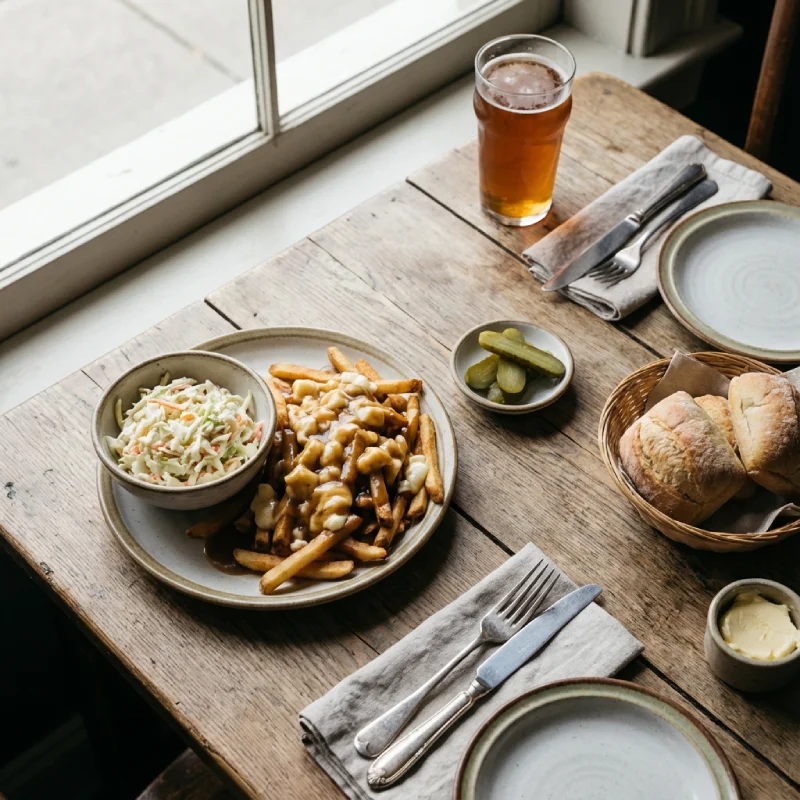
Canadian restaurant sides showcase the nation’s multicultural heritage through iconic dishes like Quebec’s poutine (crispy fries, cheese curds, and gravy), Montreal smoked meat with coleslaw, Maritime fish and chips, British-inspired potato salads, and fusion favorites reflecting generations of immigrant culinary traditions.
Canadian restaurant sides tell a delicious story of cultural diversity and culinary evolution. From Quebec’s iconic poutine to Maritime fish dishes, these beloved accompaniments blend traditional techniques with regional ingredients, creating memorable dining experiences that families cherish across the country.
Key Takeaways
- Poutine combines crispy fries, fresh cheese curds, and brown gravy, originating in 1950s Quebec and now served nationwide as Canada’s signature side dish.
- Traditional Montreal smoked meat sides include dill pickles and coleslaw that balance the rich, peppery flavors of the cured brisket.
- Fish and chips pairs beer-battered cod with twice-fried thick-cut chips, reflecting British colonial influence across Canadian provinces.
- Regional fusion sides like Halifax donair and Calgary ginger beef demonstrate Canada’s multicultural culinary innovation and immigrant contributions.
- Cabbage and potato salads feature crisp vegetables in vinegar or mustard dressings, often marinated 24 hours for maximum flavor depth.
Poutine: Quebec’s Gift to the Nation
Poutine stands as one of Canada’s most cherished comfort foods, a modest dish born in rural Quebec that has captured hearts and appetites across the nation. This simple yet satisfying combination of crispy french fries, squeaky fresh cheese curds, and rich brown gravy emerged in the late 1950s in Centre-du-Québec.
What began as unsophisticated country fare has transformed into a symbol of Québécois heritage and Canadian culinary identity. The dish initially remained confined to Quebec’s dairy region due to the narrow freshness window required for cheese curds to maintain their characteristic squeak.
Today, you’ll find this extraordinary food served everywhere from food trucks to upscale restaurants, with traditional versions remaining the most popular choice. Poutine’s international popularity continues to grow as visitors explore why Canadians celebrate this iconic dish at festivals and gatherings throughout the year.
Montreal Smoked Meat on Rye: A Romanian-Jewish Legacy
When Romanian and Hungarian Jewish immigrants arrived in Montreal during the late 1800s and early 1900s, they brought centuries-old meat curing techniques that would transform Canadian culinary culture. They adapted their traditional pastrami recipes to create what is now known as Montreal smoked meat.
Romanian Immigration Culinary Impact
Romanian Jewish immigrants settled into Montreal’s crowded downtown neighborhoods during the early 1900s, carrying preservation techniques and flavor profiles that would eventually define Montreal’s restaurant identity. These culinary traditions transformed simple beef brisket into the beloved smoked meat that now represents exceptional cultural preservation across generations.
| Traditional Element | Montreal Adaptation |
| Romanian pastrami spicing | Quebec peppercorn-heavy rubs |
| Eastern European brining | Extended 10-day curing process |
| Wood-smoking methods | Local hardwood selections |
| Hand-slicing technique | Thick-cut presentation style |
| Rye bread accompaniment | Lighter Canadian rye varieties |
Traditional Preparation and Serving
The transformation from cured brisket to Montreal’s signature sandwich requires patience, precision, and traditional techniques perfected over multiple generations. After smoking for 4-8 hours at 225°F and steaming for 2-3 hours, the tender meat rests before being hand-sliced against the grain.
The traditional assembly begins with seedless light rye bread generously smeared with bright yellow mustard, followed by approximately two inches of piled smoked meat showcasing signature ingredients of cracked black peppercorns and coriander seeds. Dill pickles and coleslaw balance the rich, peppery flavors, creating a complete meal that represents Montreal’s Romanian-Jewish culinary heritage.
Maritime Fish Traditions: Cod Tongues and More
Along Newfoundland’s rugged coastline, families have treasured cod tongues as one of the most delicate parts of the fish for generations. These triangular throat muscles get pan-fried in traditional salt pork fat until they develop a golden-brown, crispy exterior while maintaining their soft, scallop-like interior.
Traditional preparation includes:
- Dredging in flour seasoned with salt and black pepper
- Frying for approximately 5 minutes per side
- Serving with tartar sauce and lemon wedges
- Garnishing with homemade mustard pickles
Fish and Chips: A British Colonial Staple
Fish and chips arrived in Canada through British colonial influence during the 19th and early 20th centuries, bringing traditional preparation methods that had made the dish a working-class staple across the United Kingdom. The classic approach involves coating fresh fish fillets in light beer batter before frying until golden and crispy.
Traditional Preparation Methods
Creating authentic fish and chips begins with selecting the freshest cod fillets available, which should be patted dry to remove excess moisture. Your frying techniques will determine the final texture, starting with cold beer mixed into flour and baking powder at a 1¼ cup to 1 cup ratio.
Oil temperature management is essential throughout the cooking process: maintaining 300°F to 350°F for the fish, while triple-cooked chips require careful progression from 250°F to 350°F across their cooking stages.
Modern Canadian Variations
Across Canada’s diverse provinces, regional spins on traditional fish and chips reflect the country’s unique geography and vast coastlines. Atlantic cod dominates Newfoundland menus, while Ontario restaurants feature lake-caught walleye and perch.
Contemporary fusion interpretations include:
- Tempura-battered fish served with Japanese-inspired dipping sauces
- Korean kimchi sides adding piquant crunch alongside fried fish
- Fish taco fries merging multiple ethnic cuisines into family-friendly portions
- Healthy alternatives using potato chip crusts instead of deep-frying
Cabbage and Potato Salads: British-Inspired Classics
These two humble vegetable dishes have anchored Canadian dinner tables for generations, bringing together the practicality of British cooking traditions with hearty appetites. Potato preparation techniques range from thick-sliced russet varieties to tender all-purpose potatoes, each maintaining structural integrity when combined with crisp cabbage ribbons.
Vinegar dressing variations include traditional apple cider vinegar marinades requiring 24-hour resting periods, or mustard vinaigrettes that add tangy complexity. The beauty lies in cold preparation methods that preserve fresh textures, while fundamental seasonings of salt, pepper, sugar, and vinegar create balanced flavors.
Gravy and Yorkshire Pudding: Comfort Food Essentials
The rich, savory gravy that pools beneath golden Yorkshire puddings represents one of Canada’s most beloved comfort food combinations, bringing together British culinary heritage with hearty family gatherings. Mastering gravy preparation transforms ordinary dinners into memorable experiences.
Essential gravy components:
- Roux formation combines butter and flour, cooked until golden brown
- Beef stock delivers robust flavor and authentic dark color
- Cornstarch slurry createsa silky texture during the final cooking stages
- Worcestershire sauce and pepper enhance depth
Halifax Donair and Calgary Ginger Beef: Regional Fusion Favorites
While traditional British-influenced comfort foods continue to anchor Canadian dinner tables, regional fusion dishes developed by immigrant communities have created entirely new categories of beloved comfort food. Halifax donair, officially recognized as the city’s signature food in 2015, combines spiced ground beef on a vertical rotisserie with a distinctive sauce made from sweetened condensed milk, garlic, and vinegar.
Calgary ginger beef, invented by chef George Wong in the 1970s, features deep-fried beef strips in a sweet, spicy, tangy sauce that blends Chinese techniques with Alberta’s beef culture. Both dishes demonstrate remarkable culinary innovation, with hundreds of locations across Atlantic Canada serving donair and ginger beef becoming a staple in Western Canadian Chinese restaurants.
Global Influences: Modern Multicultural Sides
Across Canada’s culinary landscape, Chinese buffets have served as gastronomic hubs where families discover an incredible assortment of dishes that blend traditional Asian recipes with Western favorites. These establishments originated in Vancouver during the 1870s to feed diverse workers.
Beyond Chinese buffets, multicultural influences continue to shape Canadian sides:
- Japanese Canadian fusion introduced inventions like B.C. rolls and sushi pizza
- Indo Canadian innovations brought East Indian roti wraps to Toronto’s streets during the 1980s and 1990s
- Calgary ginger beef exemplifies regional Chinese-Canadian creativity
- Montreal peanut-butter dumplings showcase unique local adaptations
Conclusion
Canadian restaurant sides tell the story of a diverse nation, blending Quebec’s poutine traditions with Maritime fish dishes, British colonial staples, and modern multicultural influences that reflect immigrant communities across the country. These beloved accompaniments create memorable dining experiences that families cherish, from crispy fries smothered in gravy to fresh coleslaw variations.Each region contributes unique flavors and techniques, ensuring that Canadian side dishes remain as diverse and welcoming as the people who prepare them with passion. Whether you’re craving traditional poutine, Maritime fish and chips, or fusion favorites, explore the rich heritage of Canadian cuisine. Visit Dixie Lee Fried Chicken today to experience authentic Canadian comfort food prepared with care and served with pride—where every side dish tells a delicious story.