
Real poutine requires three things: fresh-cut fries, actual cheese curds (not sauce), and made-from-scratch gravy. Fake poutine is fries, a yellow cheese sauce from a pump, and instant gravy. Dixie Lee’s Famous Poutine uses real curds and real gravy because the difference you taste is worth the extra work. Once you’ve eaten the real thing, the fake stuff tastes like regret.
Poutine gets made wrong more often than it gets made right. A lot of that is laziness. Some of that is cost-cutting. Most of it is that people haven’t tasted real poutine, so they don’t know what they’re missing.
Authentic poutine starts in Quebec and should stay true to its origins. Real cheese curds (which squeak between your teeth), real gravy (made from stock and roux, not powder), fresh-cut fries. Everything else is a shortcut pretending to be food.
Dixie Lee’s Famous Poutine doesn’t take shortcuts. We use real curds from suppliers who understand the product. We make gravy in-house. We fry fresh daily. You taste that difference the moment you bite into it.
This guide walks you through what makes poutine real, what shortcuts chains use, and why spending slightly more for the right version is worth it every time.
Find the best fried chicken restaurant in Penetanguishene and our poutine at our Penetanguishene location, or contact us to learn more.
The Cheese Curd Difference: Why Squeaky Matters
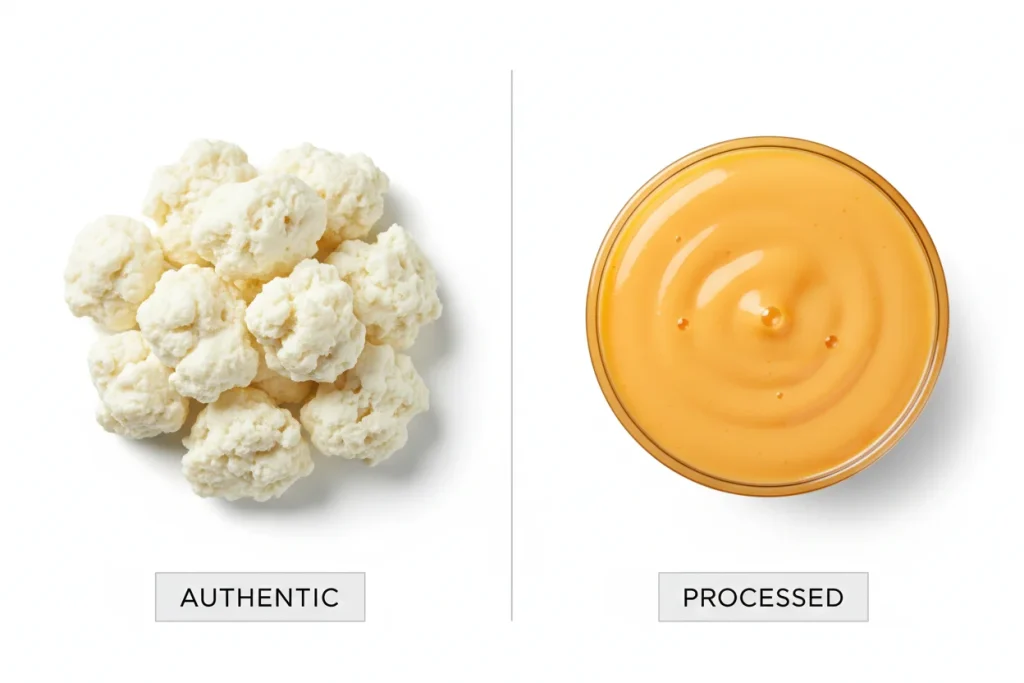
Here’s what most people don’t know: cheese curds squeak. That squeak is actual chemistry. It means the curds are fresh and the protein structure hasn’t broken down yet.
Real cheese curds squeak between your teeth because the proteins haven’t bonded yet—a sign of freshness. Aged cheese sauce never squeaks. It slides. If your poutine cheese doesn’t squeak, you’re eating processed sauce, not curds. The dairy quality behind squeaky curds reflects commitments from producers supported by Dairy Farmers of Canada, whose members maintain strict standards for milk freshness and cheese production that make real curds possible.
The difference starts with sourcing:
Real Cheese Curds
- Made from fresh cheese (usually cheddar)
- Cut into chunks, not processed
- Mild, slightly salty flavour
- Squeak when fresh (this is normal, good)
- Start melting around 140°F (the top of the fries provides just enough heat)
- Cost more because they’re actually dairy
Cheese Sauce (The Fake)
- Powdered cheese mixed with liquid
- Yellow colour from food colouring (real curds are white or pale yellow)
- Tastes like salt and chemical processing
- Never squeaks (proteins already broken down)
- Pumped from a dispenser, never in a fridge
- Cost less because it’s shelf-stable
You’re not choosing between “cheese curds” and “cheese.” You’re choosing between real dairy and processed replacement.
| Aspect | Real Curds | Fake Sauce |
| Source | Fresh cheese | Powder mix |
| Texture | Squeaky, firm | Smooth, flowing |
| Flavour | Mild dairy, salty | Chemical, salty |
| Melting point | 140°F (warm) | Pumped at any temp |
| Shelf life | Days | Months |
| Freshness indicator | Squeaks | Never squeaks |
The Gravy Foundation: Stock vs. Instant
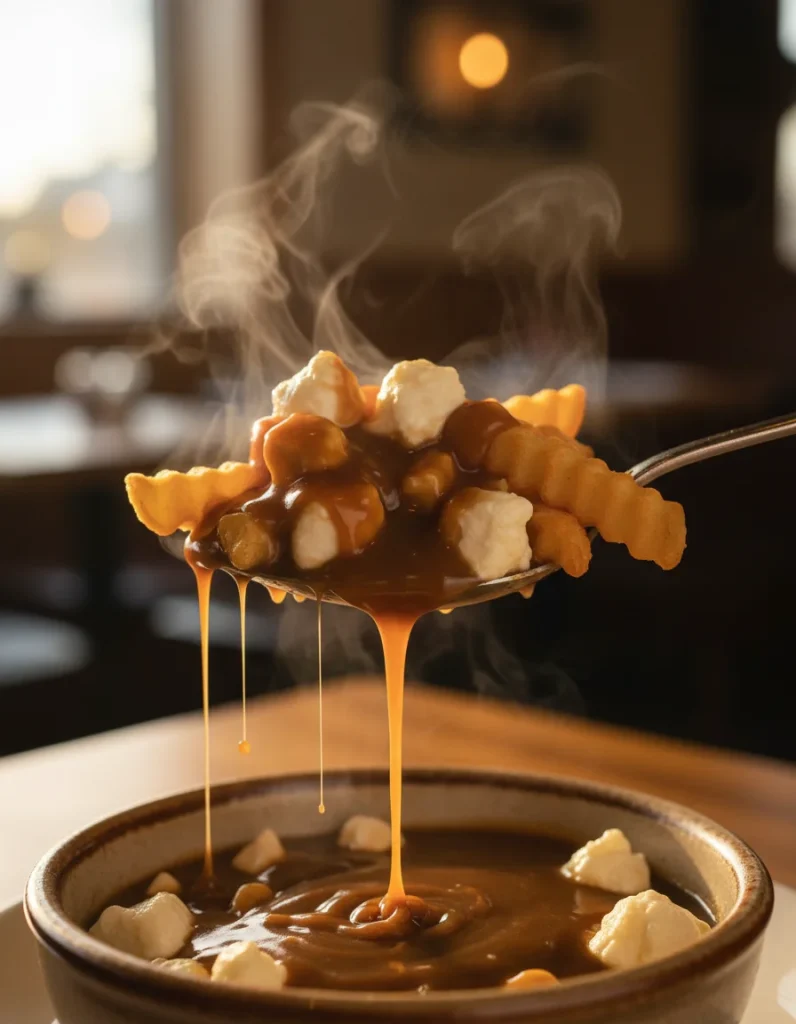
Gravy is either made or assembled. Real gravy is made. Fake gravy is assembled from powder and hot water.
Brown gravy made from stock—chicken or beef broth reduced with roux and seasoning—tastes complex and rich. Instant gravy (powder + water) tastes salty and one-dimensional. The difference is the time investment.
Here’s what real gravy requires:
- Stock (chicken, beef, or vegetable—made from bones and simmer time)
- Roux (butter and flour cooked together to thicken)
- Seasoning (salt, pepper, maybe Worcestershire or soy sauce)
- Patience (20–30 minutes minimum, not 2 minutes)
Instant gravy skips steps 1, 3, and 4. You add powder to hot water, and you have “gravy” in two minutes.
The taste difference is massive. Real gravy has depth. You can taste the stock. You can taste how the roux was made. Instant gravy tastes like salt with a beef-flavoured idea.
For poutine specifically, the gravy coats the fries and dissolves into the warmth of the cheese curds. Bad gravy ruins this. Good gravy becomes part of the experience.
Dixie Lee makes gravy from scratch. That decision—to spend time—is why the poutine tastes right.
| Gravy Type | Time | Taste | Complexity | Cost |
| Stock-based | 30 min | Rich, deep | High | More |
| Instant powder | 2 min | Salty, flat | Low | Less |
| Frozen prepared | 5 min | Decent, decent | Medium | Medium |
Fresh-Cut Fries: The Foundation Everything Sits On
Poutine lives or dies on fries. You can have perfect curds and gravy. Soggy fries ruin it.
Fresh-cut fries (peeled, sliced, and fried daily) have a crispy exterior that resists sogginess from gravy for 5–7 minutes. Pre-cut frozen fries get soft immediately because they’ve oxidized and lost structure. Fresh fries are the only choice.
Fries degrade fast:
- Minute 1: Crispy, hot, perfect
- Minute 3: Still crispy, soaking in gravy
- Minute 5: Texture changing, gravy absorbed
- Minute 7: Getting soft, still edible
- Minute 10: Soggy, regrettable
If you’re using frozen fries, they’re soft by minute 3. The gravy just accelerates what’s already happening.
Real poutine shops cut fries daily from fresh potatoes. Some do it multiple times per day. That’s why true Quebec poutine tastes different—fresh product matters.
Dixie Lee’s Famous Poutine uses fresh fries because soggy poutine isn’t poutine. It’s sadness on a plate.
Why Chains Take Shortcuts (And What It Costs You)
Chain restaurants aren’t evil. They’re cost-optimized. And cost-optimization means that real products take a back seat.
Chains use cheese sauce because it’s shelf-stable, cost-predictable, and eliminates refrigeration costs. They use instant gravy for speed and portion control. They use frozen fries for consistency. Each choice saves money. Each choice reduces taste quality.
The math is simple:
- Real curds cost $2.50/lb, last 3 days
- Cheese sauce costs $0.50/lb, lasts 3 months
- Fresh gravy costs $0.40/serving to make
- Instant gravy costs $0.08/serving
- Fresh-cut fries cost 20% more than frozen ones
A chain serving 500 poutines per week saves money with every shortcut. The savings add up to thousands annually. And the customer eats worse poutine.
At a local restaurant (especially one that makes custom-made equipment and proprietary recipes work), the owner’s reputation depends on poutine being right. So they don’t take shortcuts.
The Toppings Game: When Extra Isn’t Better
Poutine gets “improved” constantly. Pulled pork, bacon, gravy variations, special sauces. Most of these distract from the core.
The best poutine toppings are restrained. Fries, curds, gravy. Everything else is decoration. If the base three is perfect, you don’t need anything else. If the base three are bad, toppings just hide sadness.
That said, valid additions:
- Extra gravy (more is fine)
- Fresh cheese curd on top (if base is already good)
- Fried chicken (obviously, this is Dixie Lee after all)
- Coleslaw (fresh, sharp contrast to rich poutine)
Invalid additions (they distract):
- Seventeen different specialty sauces (means base gravy isn’t good)
- Pulled pork (texture war with fries)
- Excessive cheese (kills the gravy ratio)
- Sweet toppings (poutine is savoury)
Master the basics before you experiment.
Key Takeaways
- Real poutine requires real cheese curds (that squeak), made-from-scratch gravy, and fresh-cut fries—no shortcuts
- Authentic poutine tastes better than chain poutine because the sourcing and preparation actually matter
- Best poutine near me is usually made by someone who refuses to use cheese sauce instead of curds
- Fresh cheese curd poutine stays structured longer than sauce-based versions because real curds resist sogginess
- Dixie Lee’s Famous Poutine uses real curds and made-from-scratch gravy because the owner’s reputation depends on quality
- Supporting local farmers through dairy sourcing is part of what makes real poutine worth eating
Conclusion
Poutine is simple: three ingredients, done right. The problem is that “done right” takes work. Real curds need refrigeration. Real gravy needs time. Fresh fries need daily cutting.
Chains don’t do this. Local restaurants like Dixie Lee do.
Once you’ve eaten Dixie Lee’s Famous Poutine made with real curds and real gravy, going back to chain poutine feels like a scam. You’ll taste the difference. You’ll understand why it matters. Poutine’s status as an iconic Canadian dish means it appears on menus worldwide; discovering Destination Canada profiles of authentic poutine experiences shows how seriously Canada promotes this culinary heritage.
Best fried chicken restaurant in Penetanguishene means we take poutine as seriously as chicken. Same sourcing. Same care. Same refusal to cut corners.Ready to taste real poutine? Visit the Penetanguishene location or contact us to order.